




Your shopping cart is currently empty.
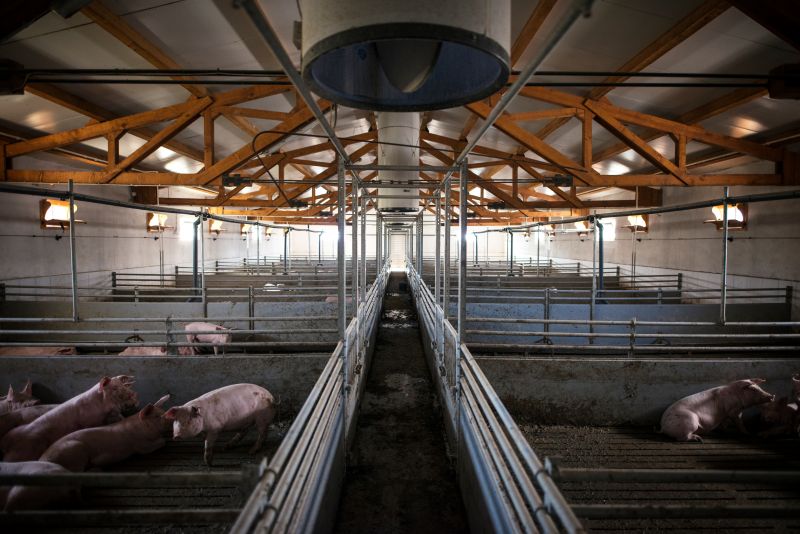
Biosecurity in livestock production extends beyond what enters or leaves a farm. Disease-control strategies also account for what moves between animals, pens, rooms, and groups once animals are inside the facility. During group vaccination, the equipment moving from animal to animal can become part of that internal biosecurity picture.
For veterinarians, producers, and livestock teams reviewing animal health equipment, needle-free vaccination biosecurity centers on one concern: reusing a conventional needle across multiple animals.
In high-throughput swine operations, where vaccination events may involve substantial numbers of pigs, reducing exposure associated with shared-needle use can be one component of a broader biosecurity strategy.
A conventional needle can come into contact with blood or tissue material during vaccination. If that same needle is then used on another animal, it may transfer contaminated material.
Shared-needle use creates a possible route for mechanical transfer between animals. Researchers have examined that risk experimentally in swine.
A Scientific Reports study involving African swine fever virus documented ASFV transmission through contaminated shared needles under study conditions. Separate PRRSV research also demonstrated biological and mechanical transmission associated with conventional needle use, while comparable transmission was not observed with the needle-free method evaluated.
Both studies examined intradermal needle-free methods, so their findings should not be generalized to every needle-free device, technology, or route of administration.
When a conventional needle is reused across animals, it can become one possible mechanism for pathogen transfer.
Needle-free vaccination changes that interaction because a shared conventional needle is no longer carried from one animal to the next. This may reduce exposure associated with that source of animal-to-animal transfer.
Biosecurity, however, involves far more than vaccination equipment. Disease can move through animals, people, surfaces, tools, air movement, vehicles, feed, mortality handling, and other routes. A needle-free approach therefore affects only one potential point of transfer within a much wider biosecurity framework.
Needle-free vaccination may help reduce exposure associated with shared-needle use, but it should not be viewed as a way to make a facility risk-free.
Biosecurity is also one of several benefits of needle-free vaccination for livestock that may factor into equipment decisions alongside worker safety, retained-fragment concerns, animal welfare, and high-volume workflows.
Commercial swine production frequently involves vaccinating substantial numbers of pigs in a single event. When a conventional needle is reused across animals, that scale can make equipment movement more relevant to internal biosecurity planning.
Needle-free technology is still not automatically the preferred choice for every swine facility. Vaccine labeling, approved route, animal size, equipment specifications, facility layout, staffing, and veterinary direction all influence device selection.
The HSW JET-PACC from Henke Sass Wolf is a needle-free intramuscular injection system that may be relevant for operations evaluating alternatives to shared conventional needles.
High-throughput production simply creates a clear reason to assess whether reducing shared-needle exposure aligns with the priorities of the livestock program.
Those priorities can vary across the common applications of needle-free livestock vaccination, including group vaccination, reduced sharps handling, mobile workflows, and connected recordkeeping.
Needle-free technology does not replace the management practices that underpin livestock biosecurity.
Sanitation, device maintenance, manufacturer-specified settings, staff training, animal handling, vaccine-label compliance, and veterinary protocols all remain part of responsible vaccination management. Poorly maintained equipment or equipment handled outside applicable requirements can introduce its own concerns.
The discussion around needle-free livestock biosecurity reflects the same principle – technology works within a larger framework of sanitation, training, maintenance, and sound animal-health practices.
For professionals seeking swine biosecurity best practices, technology is only one part of the equation. The effectiveness of any device is shaped by the broader biosecurity program in which it is used.
Internal biosecurity depends on managing multiple sources of disease movement. In group vaccination, equipment choice is one component of that larger picture, particularly when conventional needles may be reused across animals. Needle-free technology can address that specific concern while working within an overall approach to sanitation, equipment care, personnel practices, animal handling, and veterinary oversight.
Veterinarians, livestock producers, distributors, and procurement teams rely on knowledgeable product guidance when comparing vaccinators, syringes, needles, and other animal health supplies. Air-Tite helps professionals navigate those choices with an understanding of vaccine requirements, facility needs, and the realities of livestock production.
Learn more about Air-Tite’s animal health expertise or connect with our team to discuss equipment for your livestock program.
This article is provided for informational and educational purposes only and is not veterinary advice. Product labeling, manufacturer requirements, and qualified veterinary guidance should inform vaccination-related decisions.
References
