




Your shopping cart is currently empty.
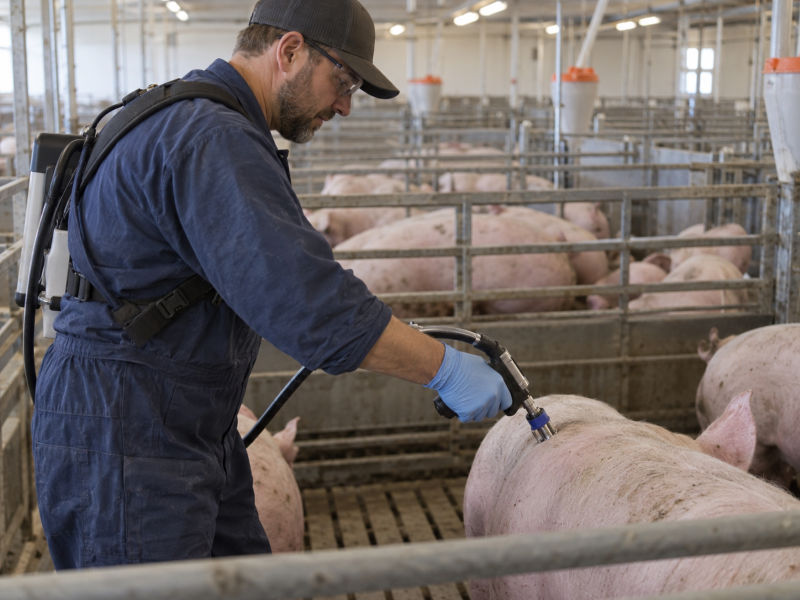
Livestock vaccination can place workers in close contact with moving animals while repeating the same physical task across large groups. Conventional needles introduce familiar hazards such as accidental needle sticks, self-injection, bent or broken needles, and ongoing sharps handling.
Within animal health, needle-free vaccination worker safety extends beyond sharps reduction. The physical design of a device—its weight, balance, grip, mobility, and overall handling—can influence how manageable it is during repeated livestock work.
That makes ergonomics an important part of the safety discussion, especially where crews vaccinate substantial numbers of animals in a single work period.
Conventional vaccination requires workers to handle exposed needles around animals that may move unexpectedly. Repeated injections can increase opportunities for accidental needle sticks or self-injection.
Needle-free technology removes the conventional vaccination needle from that task. This can reduce worker exposure to those particular sharps hazards and avoid bent or broken vaccination needles during delivery.
Sharps disposal changes as well. Conventional needles require appropriate handling after use, whereas needle-free vaccination reduces the number of sharps that must be managed during vaccination work.
These worker-safety advantages are among the benefits of needle-free vaccination for livestock, but sharps reduction is only one part of the worker experience.
A device can reduce contact with sharps and still place physical demands on the user.
Vaccination tools may be carried, positioned, triggered, and repositioned many times during livestock work. Over a longer session, total weight, weight distribution, grip dimensions, hand position, and the placement of batteries, compressors, tubing, or vaccine containers can affect fatigue and comfort.
This adds an important layer to how needle-free vaccination improves worker safety. Removing the exposed needle changes one hazard. Still, device design also affects how workers interact with the technology during repeated use.
Weight, mobility, and accessibility for workers with different physical builds are also important factors in needle-free livestock equipment.
Portable, stationary, and wearable designs place weight and hardware differently, which can affect how the device feels in use.
A handheld format may favor mobility but place more weight in the hands and arms. A stationary arrangement can shift some hardware away from the user, though it may be less convenient where crews move through a facility.
Backpack-mounted designs take a different approach by redistributing weight across the body. The HSW JET-PACC from Henke Sass Wolf, for example, uses a backpack-mounted configuration and battery separately from the handheld injector.
The best design varies with barn layout, animal movement, vaccination volume, workforce characteristics, and vaccine requirements.
Mobile and stationary formats also appear among the common applications of needle-free livestock vaccination, where facility layout and group size can shape device choice.
Livestock workers may experience the same device differently during repeated use. Grip comfort, reach, balance, and overall handling can vary across the workforce.
A grip that feels comfortable to one worker may be awkward for another. Balance and weight distribution can also affect workers differently during sustained use.
That makes ergonomics relevant to needle-stick prevention for livestock operations. Reducing sharps exposure is valuable, but the device must also be manageable across the workforce.
For facilities with multiple crews or employees rotating through vaccination work, body size and physical capability can influence how well a device integrates into established workflows.
High-volume vaccination can make subtle ergonomic characteristics more noticeable.
Trigger placement, grip pressure, balance, tubing position, and weight distribution may seem minor during brief use. Across a longer work period, those details can contribute to fatigue or awkward positioning.
For livestock teams considering how to reduce sharps risk without overlooking ergonomics, sharps reduction should be weighed alongside the physical demands of repeated device handling.
This is where worker comfort, physical usability, and throughput intersect.
Training, cleaning, maintenance, manufacturer requirements, and technical assistance all influence how safely unfamiliar vaccination technology is integrated into livestock work. This is especially relevant for devices with wearable hardware, tubing, batteries, compressors, or other features that differ from conventional syringes.
Technical support can also help teams understand device differences before introducing new technology into established workflows.
Needle-free vaccination may reduce worker exposure to accidental needle sticks, self-injection, broken needles, and routine sharps handling. Ergonomics adds another layer: weight, balance, grip, mobility, repetitive use, and differences among workers can all affect day-to-day usability.
Air-Tite helps livestock professionals compare vaccinators and related animal health products with both worker needs and vaccination requirements. Product guidance and technical support can help teams compare unfamiliar devices and assess which configurations align with their facility and workforce.
Learn more about Air-Tite’s role in animal health or speak with our team about equipment choices for your livestock program.
This article is provided for informational and educational purposes only and is not veterinary or occupational safety advice. Product labeling, manufacturer requirements, workplace policies, and qualified professional guidance should inform vaccination-related equipment decisions.
