


.png)
German surgical instrument maker Hermann Luer invented Luer Lock and Luer Slip syringes in the late 1800s. He designed them to provide a leak-free connection between needles and syringes while maintaining a continuous fluid flow lumen.
Each syringe design offers distinct advantages that make it more suitable for certain applications. Read on to learn more about Luer Lock vs. Luer Slip syringes and find out which one is right for your application.
How Does a Luer Lock Tip Work?
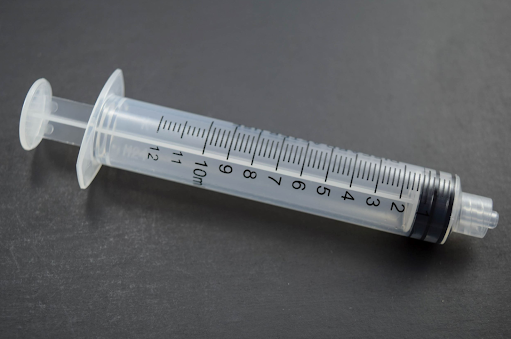
At the tip of a Luer Lock syringe, you’ll find an internal thread where the needle attaches in a screw-like fashion. Turning the needle clockwise locks it in place. Turning counterclockwise allows it to detach.
The Benefits of a Luer Lock
The advantage of a Luer Lock design is that it creates a more secure attachment. This allows for the connection to sustain higher pressures with a reduced risk of leaks or pop-off. There are instances when a Luer Lock attachment may be the only compatible attachment to a component of a device.
It is recommended when using a needle with a Low Dead Space needle hub, to use a Luer Lock syringe for a secure fit and reduce the risk of pop-off, due to the shorter hub height.
How Does a Luer Slip Tip Work?
Luer Slip syringes use a friction-fit connection method. A needle’s hub is pushed onto the syringe tip in a twisting motion for a tight fit.
The Benefits of a Luer Slip
A Luer Slip design allows for a needle to be conveniently attached more quickly. Repeated twisting required to secure Luer Lock needles may lead to faster hand fatigue compared to the simpler push-fit design of Luer Slip syringes. The potential lower manufacturing costs for Luer Slip syringes may also make them a more cost-effective option.
In addition, there are occasionally components of devices, such as valves or tubing, that are only compatible with Luer Slip tips in specific applications.
ISO Standards: Luer Lock vs. Luer Slip
Luer Lock and Luer Slip syringes both conform to multiple ISO standards, including ISO 80369—Small-Bore Connectors. The Luer fitting ensures compatibility between any ISO syringe and any ISO needle (or other attachments, such as tubing and valves).
Both Luer Lock and Luer Slip syringes comply with the same family of ISO standards. ISO 80369 guarantees that one manufacturer’s syringe can be used with another manufacturer’s needle. The “cone” shape and 6% taper of the Luer are standardized within tolerances. Luer Lock syringes also have specific thread pitch and size parameters.
ISO 80369 covers several features:
Luer Slip
- Length of taper
- Tip diameter (inside and outside)
- Tip radius
Luer Lock
Same as Luer Slip, plus:
- Angle, pitch, and width of the internal thread
- Length and diameter of thread collar
- Projection of the tip from the thread collar
It’s worth noting that ISO standards are revised every few years to ensure optimal performance.
Luer Lock vs. Luer Slip: Side-by-Side Comparison
To help clarify which design may be best for your needs, here’s a side-by-side comparison of key features:
|
Feature
|
Luer Lock Syringe
|
Luer Slip Syringe
|
|
Connection Type
|
Threaded/twist-lock connection
|
Push-fit/slip connection
|
|
How the Needle Attaches
|
Needle is twisted and locked into place
|
Needle is pushed on by friction
|
|
Security of Needle Attachment
|
Very secure
|
Less secure; may detach if not firmly pushed
|
|
Risk of Leakage
|
Very low
|
Moderate, especially under pressure
|
|
Ease of Use
|
Slightly more complex (requires twisting)
|
Simple and quick to attach
|
|
Common Applications
|
IV injections, high-pressure injections, precise dosing, general use
|
Low-pressure injections, general use
|
|
Compatibility with Needle Types
|
- Compatible with all standard needles with Luer Lock fitting
- Low dead space options available
- Preferred for high-gauge (30G–33G) needles and viscous materials
|
Compatible with standard needles, but not twist-lock types
|
|
Suitability for High-Pressure Injections
|
Ideal—prevents detachment or leakage; suited for high-pressure/high-viscosity materials
|
Not recommended—can lead to detachment
|
|
Industry Preferences
|
Human Health, Aesthetics, High-risk injections, Animal Health
|
Animal Health, Lab use, Aesthetics, General fluid transfer
|
|
Availability in Different Sizes
|
Widely available in many sizes
|
Widely available in many sizes
|
|
Cost Comparison
|
Slightly more expensive (e.g., Exel 1mL LL: $31.95/box of 100)
|
Slightly cheaper (e.g., Exel 1mL LS: $15.95/box of 100)
|
How to Order a Luer Lock Compatible Needle
ISO standards also govern needle hubs. Standard hypodermic needles fit Luer Slip and Luer Lock syringes.
Standardized fittings also apply to “Luer” connections for tubing, catheter connections, stopcocks, adaptors, and compounding adaptors.
As a general rule, all of our hypodermic-style needle hubs work on all Luer Lock and Luer Slip syringe tips.
Luer Lock Product Options
There are various options available, such as:
|
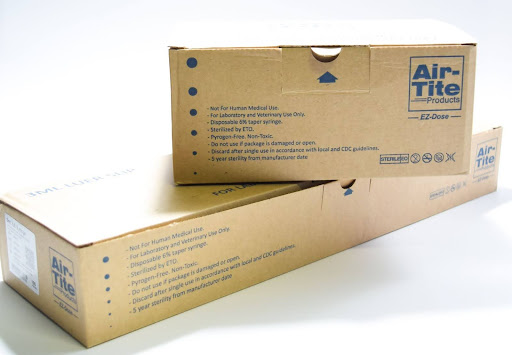
Air-Tite Luer Lock Syringes are for veterinary and laboratory use only. They’re economical yet made from high-quality parts. We manufacture Air-Tite Luer Lock Syringes in China to our exacting standards before individually packaging them for sterility.
|
|
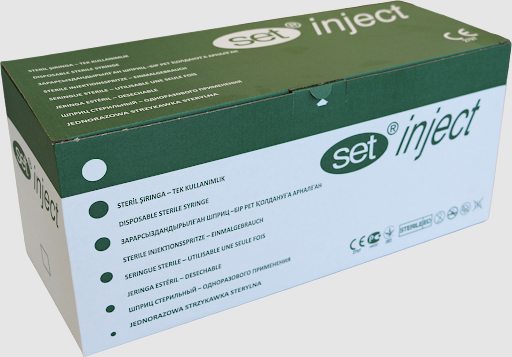
Set Medikal 3-Part Syringes, manufactured in Turkey and 510K registered for human medical use, are designed for precision, safety, and comfort. Made from polypropylene with glass-like transparency, they feature a latex-free isoprene rubber gasket and silicone oil lubrication for smooth piston movement, along with a stop-point mechanism to prevent accidental removal.
|
|
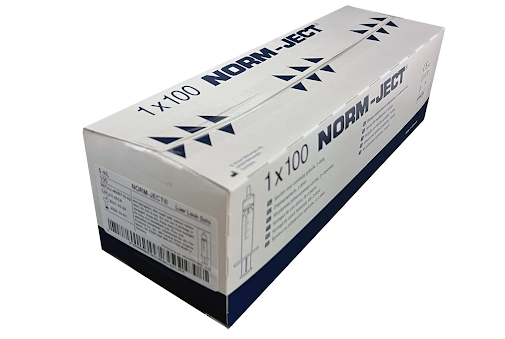
These Henke-Ject® and NORM-JECT® latex-free syringes do not contain silicone oil, styrene, DEHP, or rubber. They’re ideal for applications that require a non-reactive, inert syringe. These syringes are sterile-strip, individually packed.
|
Luer Slip Product Options
|
These syringes are for laboratory and veterinary use only. We manufacture in China to our exacting standards and use the highest quality components. These syringes are highly economical and packaged individually in sterile poly bags.
|
|
These latex-free NORM-JECT® and Henke-Ject® syringes do not contain styrene, silicone oil, DEHP, or rubber. They’re made out of laboratory-grade polyethylene and polypropylene and are more chemically resistant than a rubber-tipped syringe.
|
|
EZ-Dose is designed to deliver exceptional control and consistency. Designed for Lab and Veterinary use only, EZ-Dose is also made with eco-conscious materials to support more sustainable practices without compromising quality, this syringe reflects our commitment to safety, precision, and environmental responsibility.
|
Need Help Choosing the Right Syringe?
At Air-Tite, we carry a wide range of Luer Lock and Luer Slip syringes. Most options are available through our national distribution partners. To learn more, please contact us for cross-reference information.
You can also reach out to speak with one of our specialists if you’re not sure which syringe is right for your application.
If you’d like to learn more about 2-Part and 3-Part syringes, please click the button below.
THE DIFFERENCE BETWEEN A 2-PART AND 3-PART SYRINGE